Everybody keeps talking about AI. The AIA 2026 wasn't an exception. It was a major topic at this edition in San Diego, showing up in talks, sessions, and booths. Still, the importance of the professional role in architecture remains central to the industry's future.
San Diego hosted another lively edition of the AIA Conference on Architecture & Design (AIA26), where thousands of architecture, engineering, and construction professionals came together. The expo was full of ideas about combining innovations into a complete approach to design, construction, and operations. AI remains a key focus in the keynotes, alongside ethical governance and human supervision.
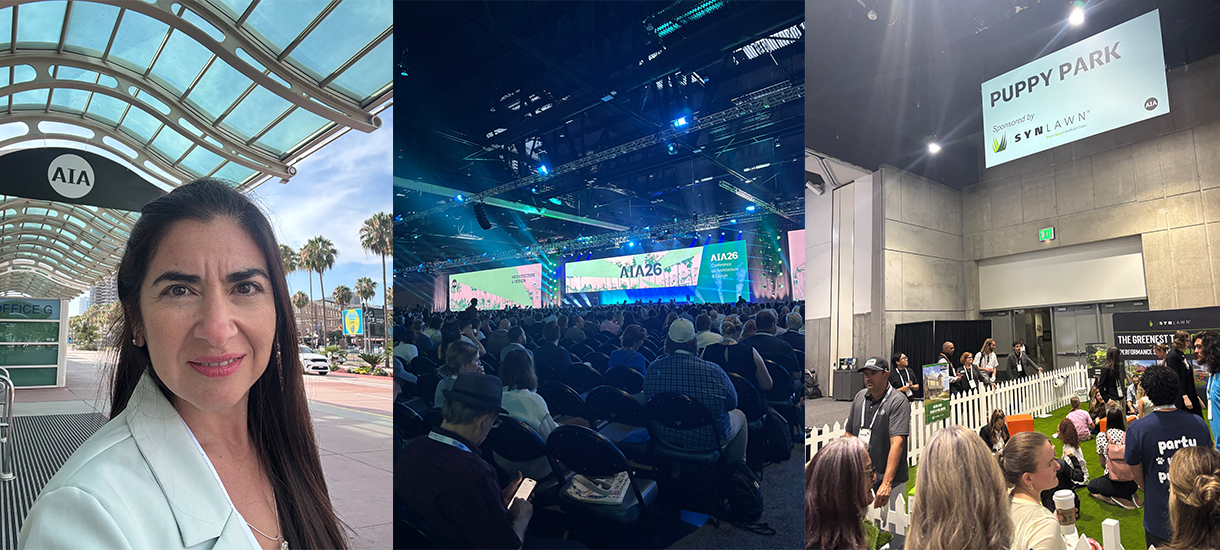
Where innovation meets application
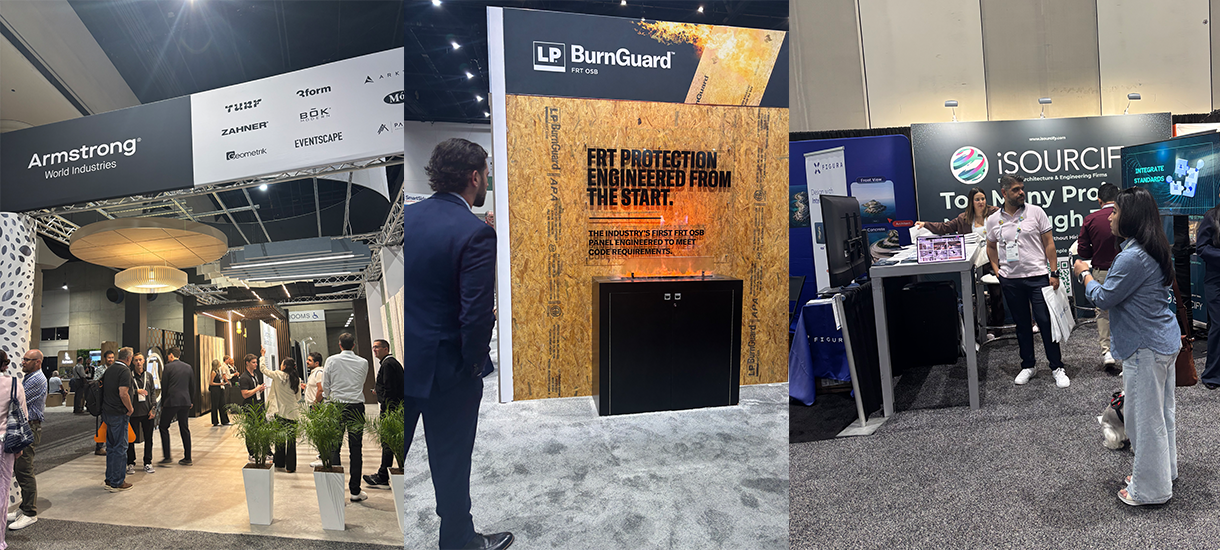
The expo brought together over 600 brands showcasing the latest products, technologies, and solutions, reflecting a shift from isolated innovation to integrated systems across the project lifecycle. From high-performance materials and modular solutions to data-driven platforms and AI-enabled tools, the focus was on improving efficiency, coordination, and long-term performance.
Beyond new launches, the expo's value lay in understanding how these innovations connect to support a holistic approach to design, construction, and operations.
Inspiration that becomes a reality
The event also featured nearly 350 expert-led sessions and hundreds of presentations across 4 days, including seminars, workshops, architalks, and keynotes. The insights behind these were:
•AI is operational: moving from experimentation to embedded workflows.
•Sustainability is measurable: performance-driven design is now expected.
•Adaptability is critical: reuse and flexibility are becoming core strategies.
• Collaboration is evolving: integrated delivery models are reshaping roles.
Here are the talks we enjoyed the most:
1-Smarter Specification Workflows with AI
Chris Metropoulos & Jeff Potter | Deltek
This session highlighted how AI is reshaping specification workflows by augmenting, rather than replacing, human decision-making. Tools like SpecPoint and DELA are reducing time spent on repetitive tasks while improving accuracy and compliance.
A key takeaway was the importance of grounded AI, in which outputs are tied to structured, reliable data. Looking ahead, intelligent systems like “Spec Intelligence” suggest a future where specifications become dynamic, connected knowledge systems.
2-Winning Work Through Storytelling
Des Joslin & Caitlin Natalie | Enarche
This workshop highlighted storytelling as a critical differentiator in a competitive market. By framing narratives around the client as the hero, firms can improve how they communicate value and stand out.
Using real-world examples, the session showed how storytelling directly impacts engagement and perceived value, making it a strategic tool for business development.
3-Designing for Legacy: Building Resilience for LA28
Davina Parbhoo & Thesla Collier | HNTB
This session examined the scale and complexity of the LA28 Olympic Games. It presented the event as an opportunity to redefine how cities design for long-term impact.
A key insight was the commitment to adaptive reuse and no new permanent venues, combined with transit-first strategies and digital tools like BIM. The message was clear: legacy is no longer an afterthought but a core design strategy.
4-Owner Advisor in Design-Build: New Practice Area, New Growth Opportunities
Stacy Shewell | Turner & Townsend Heery, Molly Jones | Jones Design Studio, Andrew Carlson | Oklahoma National Guard, Praful Kulkarni | CannonDesign
This session explored how the expansion of design-build delivery is creating new opportunities for architects to step into the Owner Advisor role.
Acting as facilitators and strategic partners, owner advisors guide procurement, align stakeholders, and ensure project success. This practice offers new revenue streams and a path to reclaim leadership in evolving delivery models.
5-The Secret to Innovating with AI? Great Humans
Graham Twigg | Hexagon Multivista
Closing the series, this session emphasized that true innovation comes from combining AI capabilities with human expertise and judgment.
Instead of full automation, the most effective approach is to apply AI to targeted tasks, freeing professionals to focus on design thinking and decision-making. The takeaway is that technology is an enabler, but people remain at the core of innovation.
AIA 2026 made one thing clear: architecture is evolving into a more integrated, strategic, and technology-driven discipline. For firms and professionals, the challenge is not just to adapt but to lead. Those who balance technology, sustainability, and human expertise will be best positioned to shape the future of the built environment.

