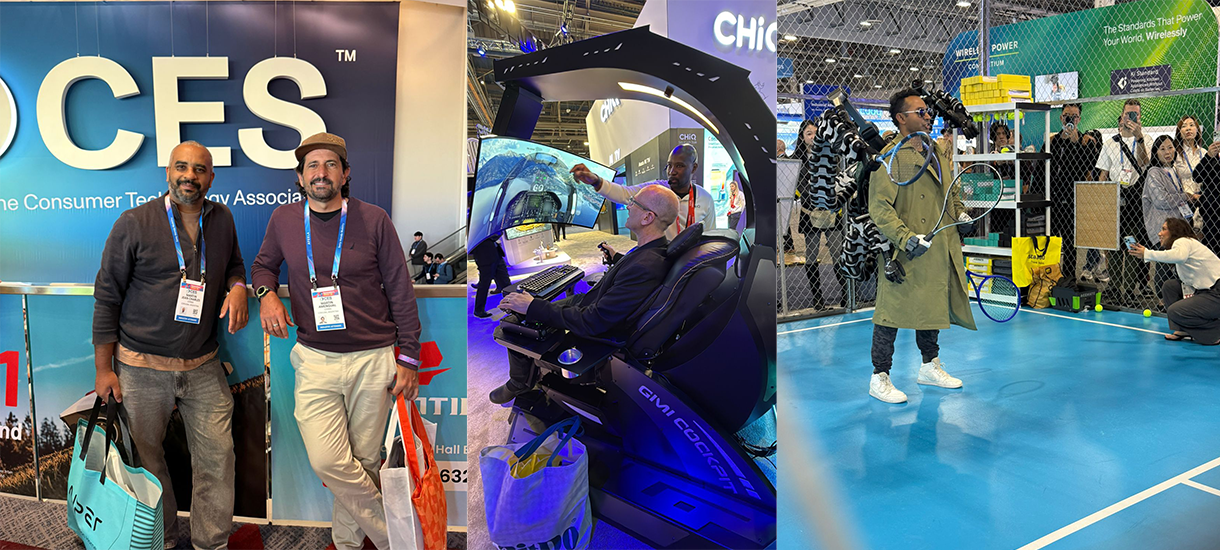
The statement is one of the takeaways from CES 2026, the largest consumer electronics and technology event held in January at the Las Vegas Convention Center. This is our recap after walking nearly 10K per day through millions of square feet of innovation and 4 days of inspiring keynotes.
In a world where AI has gone mainstream—and with it, hype, exaggeration, and confusion—we needed a place to look at the landscape with clearer judgment: what is truly mature, what is actively being adopted, and what is still mostly promise. Attending CES wasn't just about “seeing gadgets and new toys.” It was about investing in clarity and decision-making: understanding where to focus and how quickly we need to operate to keep pace with change.
In the last few years, we’ve seen a real AI revolution. Tools like ChatGPT, Gemini, and other large language models (LLMs) are now available to everyone, not just experts. Ideas that once stayed in research papers or small groups are now beyond early adopters, and the possibilities feel huge.
But the explosion of tools (and the speed at which they spread through social media) also brought noise: inaccuracies, half-truths, fake news, and significant uncertainty. Alongside the excitement came real questions: Will AI take our jobs? Will we become fully dependent on it? How will it change our lives and the way we work?
That’s the backdrop that brought us to CES 2026. Staying close to the latest technology, testing it, and applying it to make our processes more efficient and our client experience better has always been in our DNA. That’s why the most important technology event was the perfect place to challenge our minds and discover where the edge is and where there is room for improvement.
At Corbis, we've been convinced for a while that AI won’t eliminate our jobs. But someone else who learns to leverage AI faster, better, and with more precision will.
The moment AI leaves the screen
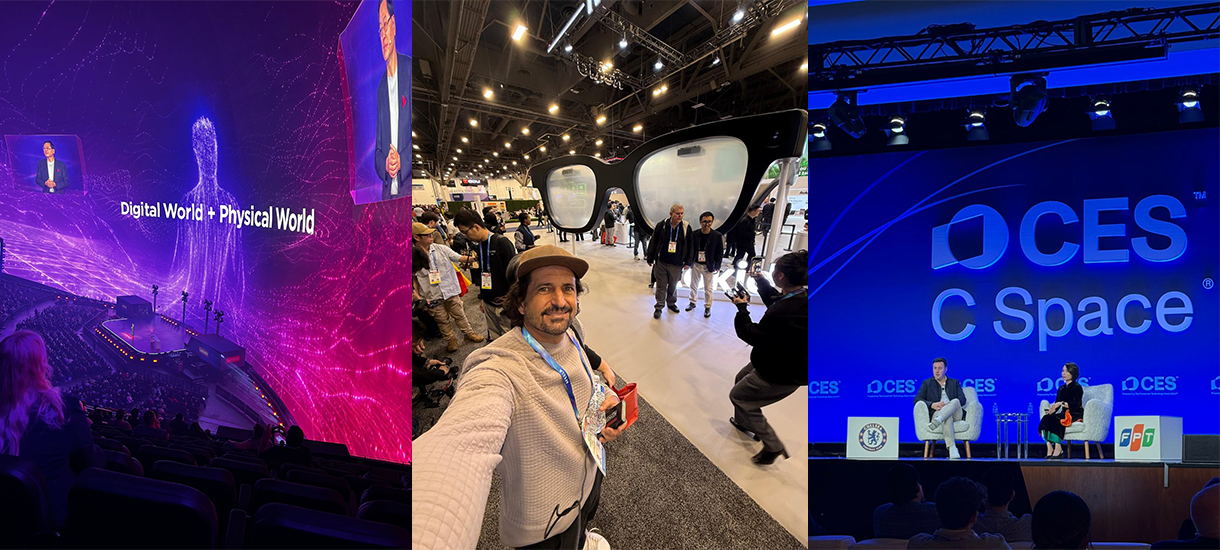
One of the most revealing insights of the CES was that the conversation was no longer only about models that “talk,” but about intelligence that acts in the physical world—what many are now calling Physical AI. During the Siemens-NVIDIA keynote, Roland Busch and Jensen Huang introduced Siemens’ Digital Twin Composer as a key enabler: creating and operating digital twins connected to real data, enabling teams to design, simulate, and optimize before reaching the real world.
In that same session, the speakers used a powerful, tangible analogy: AI as a general-purpose technology, comparable to what electricity was in its time. Just as it is almost impossible to imagine modern life without electricity, soon it will be hard to imagine devices and systems that do not use AI to become more energy-efficient, safer, and more comfortable, both in life and at work. Unlike electricity, we are not talking about a 30-year adoption curve; we may be talking about months.
What made it more compelling is that the concept did not stay at the level of rhetoric; it appeared in concrete verticals. Beyond Siemens’ approach, Caterpillar brought it down to the jobsite with examples of edge AI, embedded assistants, and robotics applied to equipment and field operations, built on physical AI platforms. Lenovo approached it from another angle: how this intelligence becomes embedded into devices and, through their public narrative, the idea of machines with a brain across everyday and productive environments.
There are many things we can do in the digital world, but the biggest challenge is bringing AI into the physical world and making it have an impact on people's lives. Martin Amengual, CEO & Founder, Corbis
Ultimately, the biggest takeaway was this shift: AI moving off the screen and into processes, infrastructure, and operations, becoming something concrete, applicable, and tangible. The message is clear: we need to learn, prepare, make decisions, and embrace AI as a tool that can help us become better, more efficient professionals.
Discover how our experts in Architectural Production, Construction Management, and Program Management can help you unlock new efficiencies and elevate your project delivery from start to finish.

